Bachelorette Party for Introverts: How to Make Everyone Feel Comfortable

Planning a bachelorette party for introverts doesn’t mean skipping the fun or turning the weekend into a completely different type of celebration. Most groups include a mix of outgoing guests, quieter personalities, and people with different comfort levels when it comes to socializing.
A few thoughtful adjustments usually make more difference than overhauling the whole plan.
What Do Introverts Actually Need From a Bachelorette Party?
One of the biggest misconceptions about introverts is that they dislike people or don’t enjoy social events.
Most introverts enjoy spending time with friends just as much as anyone else. The difference is that long periods of social interaction tend to drain their energy rather than replenish it.
A typical bachelorette weekend often combines several things that can feel overwhelming when stacked together:
You won’t always notice the impact of these things immediately. Many introverts continue participating even when they’re feeling socially drained. But then they start becoming a little quieter, skipping a late-night activity, or disappearing for a solo coffee run before rejoining the group.
That distinction matters because the goal isn’t to dial back the fun. It’s to create a weekend where different personalities can enjoy themselves comfortably.
How to Plan a Bachelorette Party for Introverts and Extroverts
Sometimes the introvert isn’t a bridesmaid or guest. It’s the bride herself.
That creates a surprisingly common planning mistake, where friends naturally suggest the activities they would enjoy most. This can lead to a weekend that feels perfect for the group but exhausting for the person being celebrated!
An introverted bride may genuinely prefer low-key bachelorette party ideas like a wine weekend, cabin getaway, spa retreat, beach house, or private dinner with close friends over a packed nightlife itinerary. The best bachelorette parties reflect the bride’s personality rather than what social media says a celebration should look like.
Downtime Matters More Than Most People Expect
Another common mistake is treating every hour as an activity slot.
I’m sure you know what I’m talking about: brunch leads to shopping, shopping leads to cocktails, cocktails lead to dinner, and dinner leads to a big night out. Before long, nobody has had an hour to themselves since arriving.
Introverts often need short periods of downtime to recharge, particularly during destination weekends.
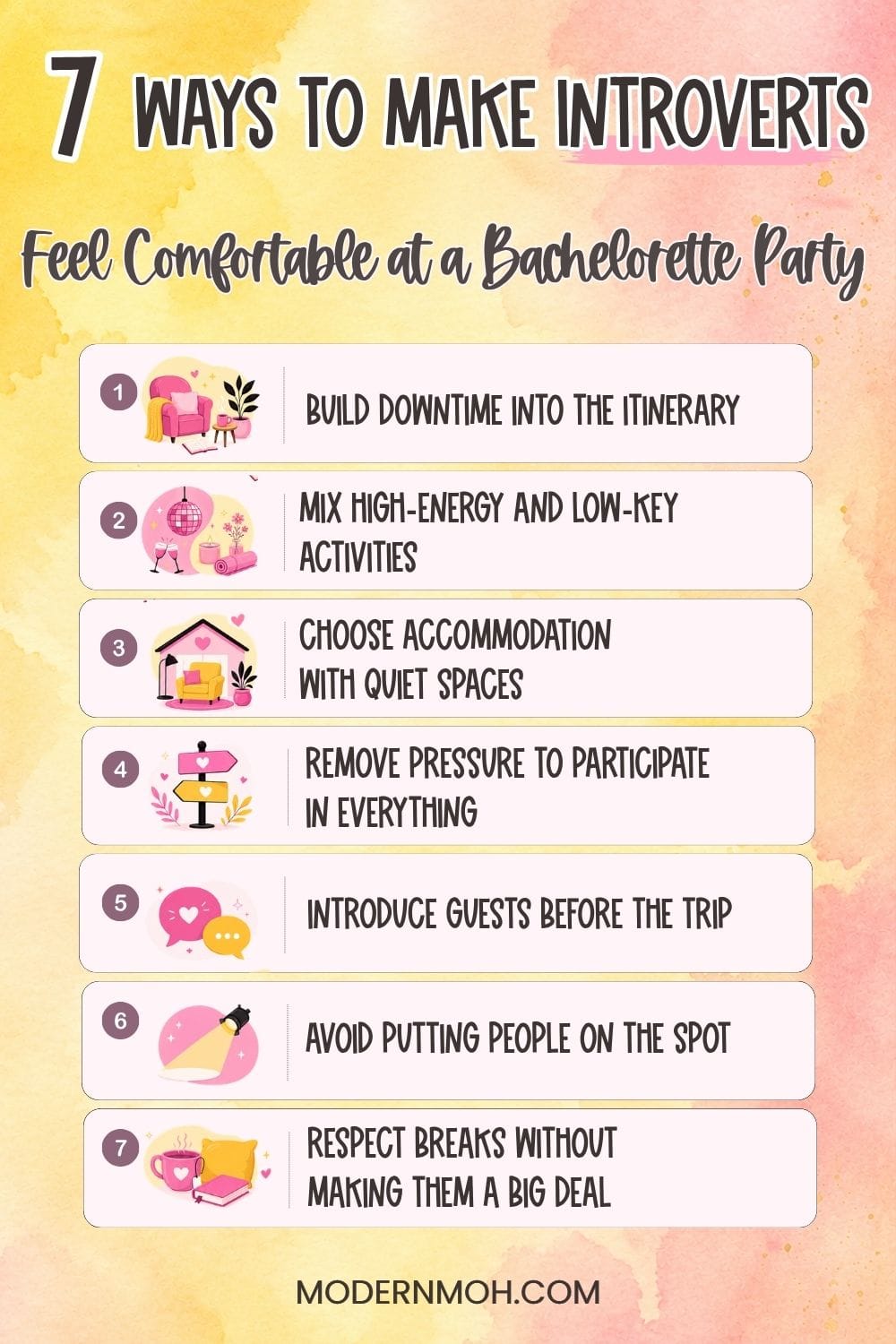
Leaving gaps in the bachelorette schedule allows people to take a nap, read, go for a walk, or simply enjoy a quiet coffee. Interestingly, these breaks often benefit the whole group — even the most outgoing guests start feeling it when a weekend becomes nonstop.
Why Activity Variety Matters
Not every bachelorette event needs to revolve around loud music and crowded venues. In our experience, some of the best moments happen when people can actually talk to one another.
So we always recommend balancing bigger social events with low-key bachelorette activities. Some of our favorites are:
- Wine tastings
- Spa sessions
- Beach days
- Boat cruises
- Private dinners
- Cooking classes
- Picnic lunches
- Game nights
These settings naturally create smaller conversations, which often feel more comfortable than trying to compete with nightclub music.
Give Guests Flexibility
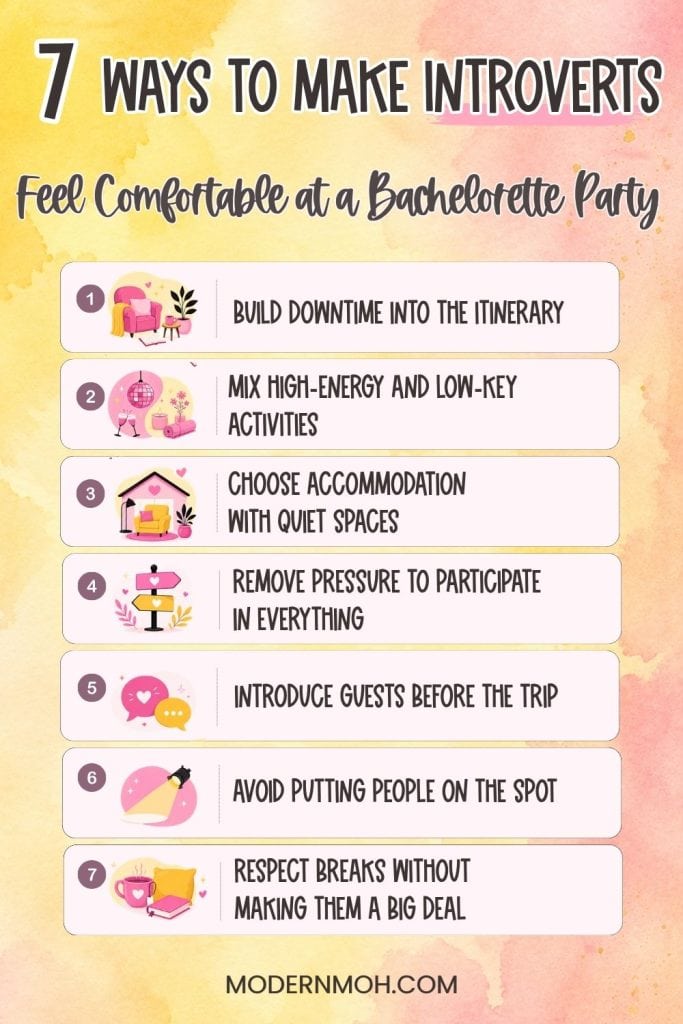
Many introverts worry they’ll be viewed as rude if they skip an activity or leave earlier than everyone else. The easiest solution for this is to set expectations from the beginning.
As the organizer, let the group know that if someone wants to join dinner but skip the nightclub afterward, that’s fine. Or if someone heads back to the accommodation while everyone else stays out late, that doesn’t need to become a big discussion either.
Giving people permission to manage their own energy often makes them more likely to stay engaged throughout the weekend rather than feeling trapped by the itinerary.
Activities Shouldn’t Feel Like Performances
Some bachelorette games and activities unintentionally put quieter guests on the spot.
Games that require public speaking, personal confessions, or performing in front of the group can feel stressful for people who don’t enjoy being the center of attention.
That doesn’t mean you need to eliminate games entirely. Instead, look for activities that allow different participation styles:
- Trivia games
- Team challenges
- Card games
- Photo scavenger hunts
- Collaborative activities
Remember that being loud and engaging isn’t the only way to tell if a guest is having fun. Some people are perfectly happy contributing from the sidelines and joining conversations when they feel comfortable. The same principle applies to conversations – not everyone wants to share their most embarrassing story in front of fifteen people they met six hours ago!
What Accommodation Works Best for Introverted Guests?
Accommodation has a surprisingly large impact on how comfortable guests feel throughout the weekend. A house packed with twelve people sharing bedrooms, bathrooms, and common areas can feel intense after a full day of activities, but private hotel rooms aren’t realistic for most groups once budgets come into play.
Still, there are ways to make accommodations more comfortable:
Someone always ends up sitting on a balcony, porch, or patio with a coffee at some point during the trip. Having somewhere peaceful to disappear for twenty minutes can make a surprisingly big difference, and the people who take those little breaks are often the ones who stay cheerful and engaged for the rest of the weekend.
Help Introverted Guests Feel Comfortable Before the Bachelorette Party
For many introverts, the stressful part isn’t the party itself but arriving at a house full of people they barely know.
Group chats are useful for more than collecting payments and sharing itineraries. Simple introductions before the trip can make a huge difference. When guests already recognize names and personalities, the first evening tends to feel much less awkward.
Many introverts become comfortable once they’ve connected with one or two people in the group, which is why room allocations should be carefully considered. Sharing with at least one familiar person often helps guests settle in more quickly than being placed in a room full of strangers.
The same thing happens at dinner tables. People naturally talk more when they’re seated beside someone they already know, which makes those first few hours of the trip feel much more comfortable.
How to Tell When an Introvert Needs a Break at a Bachelorette Party
Introverts rarely announce that they’re feeling socially drained, so the signs are usually subtle.
Around the second day of a destination weekend, there’s usually at least one person who disappears for a coffee run that somehow takes forty-five minutes. Most of the time, they just need a little breathing room before jumping back into the group.
You might notice someone:
- Becoming quieter than usual
- Spending time alone
- Skipping a conversation
- Taking a walk
- Heading to bed earlier than everyone else
In most cases, they’re simply managing their energy, not signaling that anything is wrong.
The kindest response is usually to let them recharge without turning it into a group discussion. A quick “Hope you’re doing okay” is the right move. Turning it into a check-in every twenty minutes usually isn’t.
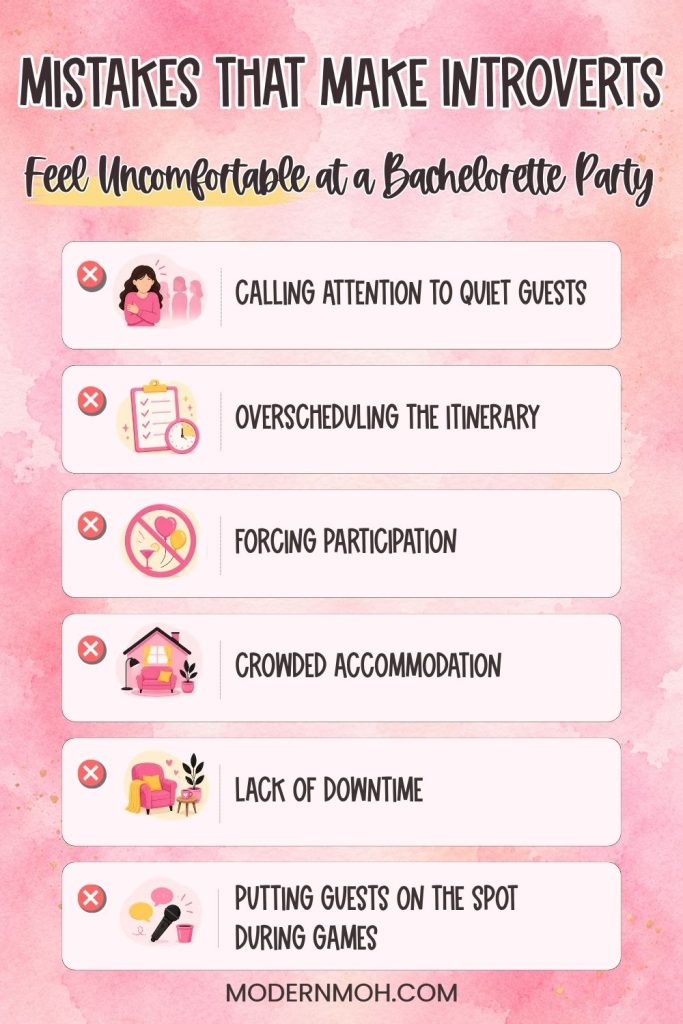
Common Mistakes That Make Introverts Feel Uncomfortable
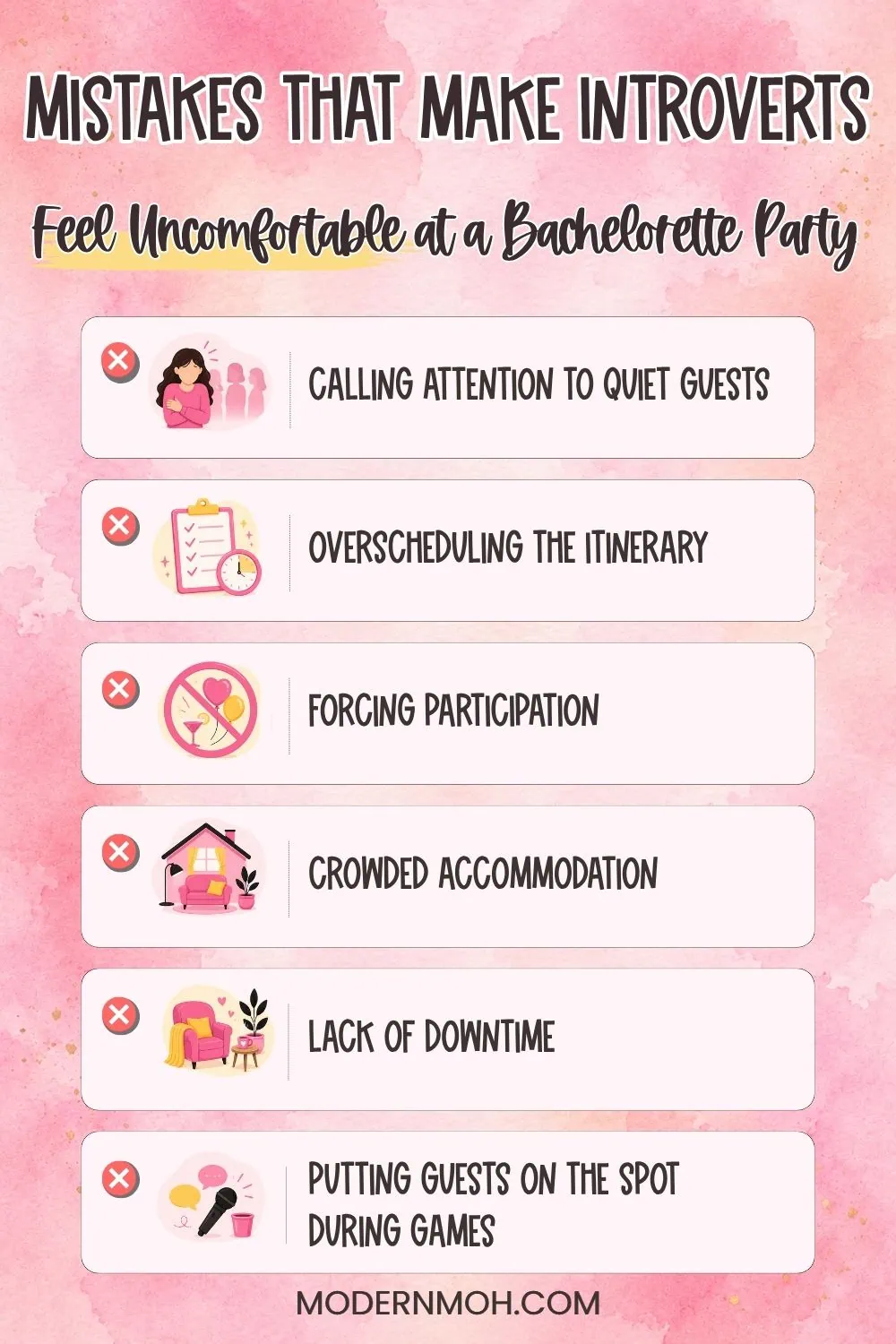
Many bachelorette planners assume introverts need special accommodations or an entirely different style of bachelorette party, but most simply appreciate having some flexibility, a little personal space, and the freedom to participate in ways that feel comfortable.
Common mistakes include:
- Calling attention to how quiet someone is
- Pressuring people to stay out later than they want to
- Treating downtime as antisocial behavior
- Expecting participation in every activity
- Putting guests on the spot during games
- Assuming quieter guests aren’t enjoying themselves
A quieter guest isn’t necessarily having less fun. They may simply be enjoying the weekend in a different way than the most outgoing people in the group.
FAQs
Should a bachelorette party be planned around introverts?
Not completely, but the bride’s personality should always carry the most weight. If the bride is introverted, the weekend should reflect what she actually enjoys rather than what other people expect a bachelorette party to look like.
What if an introverted bridesmaid doesn’t want to attend every activity?
That’s usually fine. Most adults don’t need to participate in every part of a weekend to enjoy it. Giving guests flexibility often creates a more relaxed atmosphere for everyone.
Are destination bachelorette parties harder for introverts?
They can be, especially when accommodation, meals, transportation, and activities all happen with the same group for several days. Downtime and personal space become much more important on longer trips.
How can the maid of honor help quieter guests feel included?
Introduce people before the trip, think carefully about room assignments, and avoid putting guests on the spot during games or conversations. Most introverts don’t need special treatment, they just appreciate feeling welcome.
The Bottom Line
A bachelorette party for introverts doesn’t need a completely different itinerary. A little breathing room in the schedule, thoughtful room assignments, and activities that don’t force everyone into the spotlight usually make more difference than people expect.
Most introverts aren’t looking for a watered-down version of the trip. They’re usually happy to join the dinners, activities, and late-night conversations when they know it’s okay to step away and recharge when they need to. The forty-five-minute coffee run usually ends with someone returning carrying three extra coffees and a story nobody’s heard before!
Pin for Later!



UP NEXT: How to Plan a Mixed-Age Bachelorette Party Without Leaving Anyone Out